Festive Season Bulk Buying: Getting Ahead of Diwali and Christmas Demand
- Published on : 17 August, 2026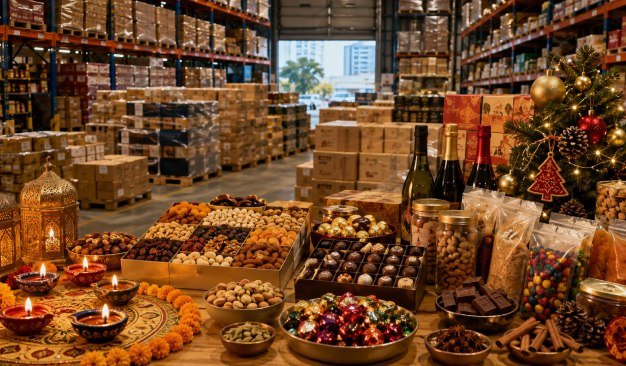
Every year it happens the same way. Diwali and Christmas fall a few weeks apart, demand spikes across the same categories, and the businesses that ordered early are the ones with full shelves in December. The ones that waited are chasing suppliers, paying more, and settling for whatever stock is left.
Singapore’s festive season is not one event. It is a stretch of few weeks where Diwali sweets, dry fruits, and gifting items overlap with Christmas baking supplies, chocolates, and hamper components. For retailers, caterers, and F&B operators, the businesses that plan their bulk buying around this window tend to come out ahead. Here is what that planning should look like.
Why Festive Demand Catches Businesses Off Guard
The short answer is timing. Diwali demand builds fast and early, often driven by home cooks, sweet shops, and gifting retailers stocking up on dry fruits, ghee-based items, and packaged snacks weeks in advance. Christmas demand then layers on top, with baking supplies, chocolates, and confectioneries moving in large volumes through November and December.
Businesses that treat these as two separate, smaller ordering cycles usually underestimate total volume. Businesses that plan for the combined festive stretch tend to order once, order enough, and avoid the mid-season scramble.
Categories That See the Sharpest Festive Spikes
Some categories move steadily all year. Others swing hard during the festive months. Based on what moves through Singapore’s retail and F&B channels each year, these are the categories worth planning around first:
- Dry fruits and nuts, especially for Diwali gifting, sweets, and mithai preparation
- Chocolates and confectioneries, for both Diwali gifting and Christmas hampers
- Baking supplies and gourmet ingredients, ahead of the Christmas baking rush
- Herbs, spices, and seasonings tied to festive cooking and catering menus
- Ready-to-eat and ready-to-cook items for retailers stocking festive convenience ranges
- Beverages, particularly gifting-format and premium lines
If your business touches more than one of these categories, the ordering conversation should start earlier than most people expect, ideally eight to ten weeks before Diwali.
What Bulk Buying Early Actually Protects You From
Ordering ahead is not just about avoiding stockouts. It protects a few things that matter more once the season is underway.
Pricing tends to firm up as festive demand peaks, particularly on imported dry fruits and gifting-format products where global supply tightens. Locking in orders early usually means locking in better pricing before that happens.
Delivery reliability also shifts during peak weeks. Distributors and logistics networks across Singapore see higher order volumes industry-wide in November and December, which can stretch lead times. Businesses that place orders early sit ahead of that queue instead of inside it.
And shelf readiness matters most in the days right before Diwali and Christmas, when foot traffic and last-minute buying peak. Running out of stock in that window is the most expensive kind of stockout, because it is the hardest to recover from before the season ends.
How to Plan Festive Bulk Orders Without Overstocking
Ordering early does not mean ordering blindly. A few habits keep festive bulk buying efficient rather than wasteful.
- Review last year’s festive sales data, or estimate conservatively if this is a new category for your business
- Separate Deepavali-specific and Christmas-specific stock so reordering later in the season is easier to manage
- Confirm certifications early, particularly Halal status on gifting and confectionery items, since festive buyers check this closely
- Ask your distributor about staggered delivery, so bulk stock arrives in phases rather than sitting in storage for weeks.
- Keep a shortlist of fast-moving SKUs you can top up quickly if a category sells through faster than expected.
Working With a Distributor Who Understands the Festive Calendar
Not every distributor plans around Singapore’s festive retail calendar the same way. What makes the difference during Diwali and Christmas season is a distributor who already carries the right mix of festive-relevant brands, understands Halal and other certification needs across a diverse customer base, and can commit to delivery timelines before the peak-week crunch hits.
Alkemal Foods works with retailers, caterers, and F&B businesses across Singapore to plan festive bulk orders well ahead of Diwali and Christmas, across dry fruits, chocolates, baking supplies, spices, and more. If your festive planning is still on the to-do list, now is the right time to start the conversation.