Ready-to-Eat vs Ready-to-Cook: Choosing the Right Format for Your F&B Business
- Published on : 7 September, 2026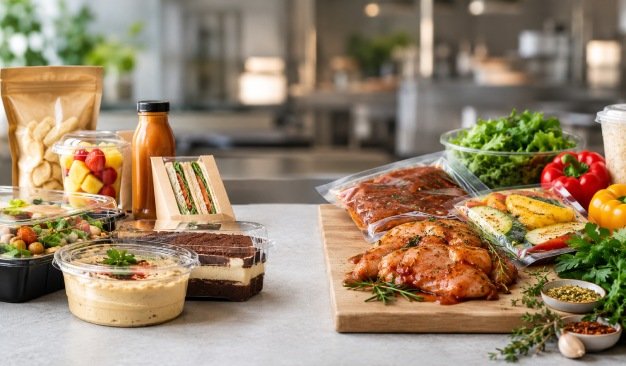
Every F&B business in Singapore, from a five-table cafe to a full-service restaurant kitchen, eventually asks the same question: should this dish be made from scratch, cooked from a ready-to-cook base, or plated straight from a ready-to-eat pack? The answer is rarely all one or the other. Most successful menus run on a mix, and getting that mix right affects everything from labour costs to plate consistency to how fast you can open a second outlet.
This guide breaks down what ready-to-eat and ready-to-cook formats actually mean for your operation, where each one wins, and how to decide what belongs on your menu.
What Ready-to-Eat Actually Means
Ready-to-eat products arrive fully cooked and need little more than portioning, plating, or light reheating. Think pre-made curries, dips and spreads, packaged desserts, or shelf-stable snacks. The kitchen work is already done upstream by the manufacturer, which is exactly the point.
Ready-to-eat products earn their place on a menu when speed matters more than customisation. Corporate pantries, hotel mini-bars, grab-and-go counters, and high-turnover breakfast services all lean on ready-to-eat products because they remove prep time almost entirely and keep output consistent no matter who is on shift.
What Ready-to-Cook Actually Means
Ready-to-cook products are prepped, marinated, portioned, or partially processed, but still need a cooking step in your kitchen. Marinated proteins, pre-mixed batters, par-cooked bases, and portioned sauces fall into this category. The chef still touches the dish, but the time-consuming groundwork, cleaning, cutting, marinating, measuring, is already handled.
Ready-to-cook products work best where the business wants to keep some kitchen craft and a “cooked to order” feel without carrying the full labour and skill burden of scratch cooking. Cloud kitchens scaling across multiple brands, restaurants running lean back-of-house teams, and cafes expanding their menu without expanding headcount all lean on ready-to-cook formats.
Comparing the Trade-Offs
Labour and skill dependency: Ready-to-eat products need almost no kitchen skill, which helps when hiring and training are difficult. Ready-to-cook products still need a cook who can execute a recipe, but not one who needs to build it from raw ingredients.
Consistency: Ready-to-eat products are the most consistent format because the manufacturer controls every batch. Ready-to-cook products are close behind, since the variable parts (measuring, marinating, seasoning) are removed, leaving only the final cooking step to standardise.
Margins: Ready-to-cook formats generally protect margins better at scale, since a partially prepped product usually costs less per unit than a fully finished one, and the final cooking step adds perceived value that supports pricing. Ready-to-eat products can compress margins if used as the core of a menu rather than a supporting item.
Speed of service: Ready-to-eat products win outright for speed. Ready-to-cook products add a few minutes for cooking but still move far faster than a from-scratch dish.
Menu flexibility: Ready-to-cook products give more room to adapt a base product into different dishes or specials. Ready-to-eat products are fixed as-is, with limited ability to personalise beyond plating.
Which Format Fits Which Business
Cloud kitchens juggling multiple virtual brands from one kitchen typically lean on ready-to-cook products. They let a small team produce varied menus across brands without needing specialist chefs for each cuisine.
Full-service restaurants usually blend both: ready-to-eat products for sides, condiments, and desserts, and ready-to-cook products for proteins and mains where a cooked-to-order feel matters to guests.
Cafes and quick-service outlets often favour ready-to-eat products for the counter menu (snacks, spreads, packaged items) and ready-to-cook products for a small hot menu that still needs to move fast.
Hotels and institutional kitchens use ready-to-eat products heavily for breakfast buffets and mini-bars, and ready-to-cook products for banquet and event cooking where volume is unpredictable and prep time is limited.
Building the Right Mix
The businesses that get the most value from ready-to-eat and ready-to-cook formats are not the ones that pick a side, they are the ones that map their menu against labour capacity, guest expectations, and margin targets, then assign each dish to the format that suits it best. A dish that needs a “made fresh” story for the guest belongs in a ready-to-cook format or scratch cooking. A dish that guests expect to be quick and consistent, like a side salad or a packaged dessert, is a natural fit for a ready-to-eat format.
Working with a distributor who carries both formats across multiple categories, herbs and spices, sauces, ready meals, and gourmet ingredients, makes it easier to adjust that mix as the menu evolves, without having to manage separate suppliers for each format.
About Alkemal Foods
Alkemal Foods is a Singapore-based wholesale food distributor, We supply restaurants, hotels, cafes, cloud kitchens, and retailers across Singapore with both ready-to-eat and ready-to-cook products from trusted international brands, spanning herbs and spices, sauces, snacks, chocolates and confectioneries, and gourmet ingredients. Whether your business needs speed or flexibility on the menu, our team can help you build a supply mix that fits your kitchen, your labour setup, and your menu. Reach out to Alkemal Foods for bulk orders and product recommendations tailored to your business.