Sourcing for a New F&B Brand: A Startup’s Guide to Finding the Right Supplier
- Published on : 18 September, 2026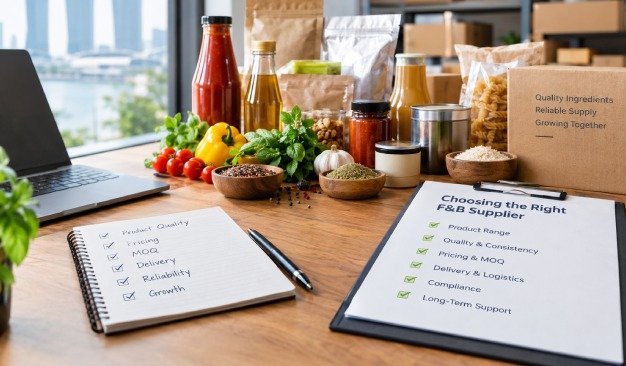
Starting a new food and beverage brand is exciting, but turning a great food concept into a successful business requires more than a good menu and strong branding. One of the most important decisions an F&B startup makes is choosing the right supplier.
From ingredients and sauces to beverages, snacks, ready-to-eat products and ready-to-cook items, your supplier can directly influence product quality, menu consistency, operating costs and customer satisfaction.
For startups in Singapore, finding a reliable F&B supplier in Singapore can make day-to-day operations easier by providing consistent product availability, dependable delivery and access to a suitable range of wholesale food products.
This guide explains what startups should consider when sourcing food products and how to choose a supplier that can support their business as it grows.
Why Choosing the Right F&B Supplier Matters
A supplier is more than a company that delivers boxes of food products.
The right supplier becomes an important part of your F&B supply chain. They can help you maintain consistent quality, manage purchasing, keep essential products available and adapt your product range as your business grows.
For a startup, supplier selection can affect:
- Product quality
- Food consistency
- Ingredient availability
- Menu pricing
- Gross margins
- Inventory management
- Delivery reliability
- Customer experience
- Ability to scale
For example, if your restaurant depends on a particular sauce or ingredient and that product is frequently unavailable, you may have to change recipes or temporarily remove menu items.
This is why startups should evaluate a food supplier in Singapore based on more than just the price per carton.
1. Start With Your Product Requirements
Before approaching suppliers, create a clear list of what your business actually needs.
Consider the products required for your initial menu or retail range. Depending on your concept, this could include:
- Herbs, spices and seasonings
- Sauces and condiments
- Baking supplies
- Chocolates and confectioneries
- Beverages
- Snacks
- Ready-to-eat products
- Ready-to-cook products
- Gourmet ingredients
Having a defined product list makes it easier to compare suppliers and obtain accurate quotations.
It also prevents a common startup mistake: choosing a supplier simply because they offer a large catalogue without checking whether their products actually fit your business.
If your concept depends heavily on convenience and kitchen efficiency, it is also worth considering the difference between ready-to-eat and ready-to-cook products for F&B businesses. The right combination can help businesses balance preparation time, consistency and menu flexibility.
2. Look Beyond Price
Price is important for every startup, but it should not be the only factor used to evaluate a supplier.
A lower purchase price does not always result in a lower overall operating cost.
Consider:
- Minimum order quantities
- Delivery charges
- Product shelf life
- Storage requirements
- Wastage
- Order frequency
- Lead times
- Product consistency
- Availability during peak periods
A supplier offering a slightly higher unit price may provide better delivery reliability, lower minimum order quantities or more consistent product availability.
When comparing wholesale food suppliers in Singapore, look at the total cost of sourcing rather than simply comparing the price of individual products.
Buying in bulk can also help businesses manage purchasing costs, provided the order volume matches actual demand and available storage capacity. Wholesale food distribution can be particularly useful for businesses that need regular supplies across multiple product categories.
3. Check Product Quality and Consistency
For an F&B brand, consistency is critical.
Customers expect their favourite dish, beverage or packaged product to deliver the same experience each time they purchase it. Variations in ingredients can affect flavour, texture, appearance and overall product quality.
When evaluating a potential supplier, ask:
- Where are the products sourced from?
- Who manufactures them?
- What quality controls are followed?
- What is the expected shelf life?
- How are products stored?
- How frequently is stock replenished?
- Are samples available?
If possible, test products before committing to large-volume orders.
A small product trial can help identify quality or operational issues before they become expensive purchasing decisions.
4. Evaluate the Supplier’s Product Range
A supplier with a suitable product range can simplify purchasing as your business develops.
Instead of working with several suppliers for every category, you may be able to consolidate part of your purchasing through a single food distributor in Singapore.
For example, a supplier offering sauces, beverages, snacks, baking supplies, gourmet ingredients, ready-to-eat products and ready-to-cook items can potentially support different parts of an F&B operation.
Alkemal Foods offers a broad portfolio covering categories such as baking supplies and gourmet ingredients, ready-to-eat meals and spreads, ready-to-cook items, beverages, snacks and sauces. This allows restaurants, cafés, caterers and other food businesses to source different types of products through one supplier.
A broad product range can become particularly valuable as your menu evolves and your business begins experimenting with new products.
5. Check Minimum Order Quantities
Minimum order quantity, or MOQ, is particularly important for startups.
Large minimum orders can tie up cash flow and create unnecessary storage challenges.
Before placing an order, ask:
What is the minimum order quantity for this product?
You should also check whether the MOQ changes depending on:
- Product category
- Brand
- Packaging size
- Delivery location
- Order frequency
- Imported products
It is useful to discuss ordering flexibility before committing to a supplier.
For more questions to ask before choosing a supplier, see this guide on four crucial questions to ask your food supplier. It covers important areas such as delivery, sourcing transparency, MOQs and payment terms.
6. Evaluate Supply Reliability
Imagine launching a popular menu item and suddenly discovering that one of its key ingredients is unavailable.
Supply interruptions can affect your menu, customer experience and revenue.
Before selecting a supplier, understand:
- How frequently products are restocked
- Typical lead times
- How orders are processed
- Whether products are imported
- How stock availability is communicated
- What happens when an item is temporarily unavailable
- Whether alternative products can be recommended
For a new F&B brand, supply reliability is particularly important because even a small disruption can have a noticeable effect on operations.
This is one reason many businesses prefer working with a supplier that can provide several product categories rather than managing multiple individual supplier relationships.
7. Understand Food Import and Compliance Requirements
If your F&B brand is sourcing imported products, regulatory compliance should be considered during the supplier selection process.
Singapore has specific requirements for commercial food imports, and the applicable requirements depend on the type of food product being imported.
For startups, this means it is important to understand the sourcing, labelling, documentation and regulatory requirements associated with the products you intend to purchase.
A supplier with experience in the Singapore food market can help make the sourcing process more structured, while businesses should still verify the requirements applicable to their specific products.
8. Consider Delivery and Logistics
A supplier’s delivery capability can be just as important as the products they sell.
Ask questions such as:
- What areas do you deliver to?
- What are the delivery days?
- What is the usual lead time?
- Is there a minimum order for delivery?
- How are temperature-sensitive products handled?
- How are damaged or incorrect deliveries handled?
- Can urgent orders be accommodated?
Reliable logistics are especially important for restaurants, cafés, hotels, caterers and cloud kitchens that need regular replenishment.
The practical impact of logistics should not be underestimated. A supplier may offer excellent products, but if deliveries consistently arrive late, the operational impact can affect your business.
For additional guidance, read What to Ask Your Food Supplier: 4 Crucial Questions, which covers supplier delivery and logistics considerations in greater detail.
9. Test the Supplier Before Scaling Up
You do not necessarily need to make your first order a large one.
A practical approach is to start with a smaller order and evaluate the complete supplier experience.
Look at:
Product quality → Order accuracy → Delivery → Packaging → Communication → Availability → Support
This gives your team an opportunity to identify potential problems before committing to larger purchasing volumes.
Once the supplier demonstrates consistent performance, you can gradually increase your order quantities.
10. Think About Future Growth
Your sourcing needs at launch may be very different from your needs six or twelve months later.
A startup might initially purchase small quantities for one restaurant, café or retail location. As the brand expands, it may require:
- Larger order volumes
- More product categories
- Multiple delivery locations
- New imported products
- More frequent deliveries
- Better inventory planning
When choosing an F&B supplier in Singapore, consider whether the supplier has the product range and operational capacity to support your potential growth.
This can save you from having to rebuild your entire supply chain later.
For businesses already dealing with operational pressures, our guide to the top challenges faced by Singapore F&B businesses also highlights how supply chain reliability, rising costs, labour challenges and changing consumer preferences can affect F&B operations.
11. Don’t Ignore Communication and Support
Good communication can make supplier relationships much easier.
Your supplier should be able to clearly communicate information about:
- Product availability
- Pricing
- Lead times
- Minimum order quantities
- New products
- Substitutions
- Delivery schedules
- Product documentation
For a new F&B brand, having a responsive supplier can be particularly valuable because purchasing requirements can change as the business learns more about customer demand.
A supplier that understands your business can also help you identify suitable products when you introduce new menu concepts or product categories.
Common Supplier Sourcing Mistakes F&B Startups Should Avoid
Choosing the Cheapest Supplier
The cheapest quote may not provide the best overall value. Always consider quality, delivery, wastage, shelf life and reliability.
Ordering Too Much Too Early
Large orders may seem attractive because of volume discounts, but excess inventory can create storage problems and food wastage.
Depending on One Product Without a Backup
For critical ingredients, understand whether alternative products or brands are available if your usual item becomes unavailable.
Ignoring Lead Times
Imported products may require additional planning. Make sure your purchasing schedule accounts for potential delays.
Focusing Only on the Launch
Your supplier should ideally be able to support your business beyond its opening stage.
Why the Right Food Supplier Can Help Your F&B Brand Grow
Building an F&B brand requires coordination across product development, operations, marketing, customer service and supply chain management.
Your supplier is an important part of that ecosystem.
A reliable wholesale food supplier in Singapore can help businesses access a wider product range while simplifying purchasing and maintaining consistent supply.
For startups, the objective isn’t simply to find a supplier who can sell food products. It is to find a sourcing partner whose products, pricing, service, logistics and capabilities fit the business model.
Choosing a Food Supplier in Singapore
For new restaurants, cafés, hotels, cloud kitchens, caterers, retailers and other F&B businesses, supplier selection should be treated as an important business decision.
From herbs and spices to sauces, beverages, snacks, baking supplies, ready-to-eat meals and ready-to-cook products, having access to the right food products can help businesses build menus and product ranges around consistent and dependable supplies.
Alkemal Foods is a Singapore-based wholesale food distributor offering a diverse portfolio of food and beverage products for businesses across Singapore.
Whether you are launching a new café, restaurant, cloud kitchen, catering business or retail concept, choosing the right supplier early can help create a stronger foundation for future growth.